Discover the Dirndl Apron Knot Meaning at Oktoberfest
The dirndl is cute, sure. But the apron bow is the real loudspeaker. If you’re stepping onto the Theresienwiese, the dirndl apron knot meaning is one of those tiny cultural details that locals notice instantly, and yes, it can change how people treat you at a table. The good news: it’s simple, it’s practical, and you don’t need to overthink it. You just need to tie it on the right side for the message you actually want to send.
Last updated May 2026. Prices reflect the 2025 Oktoberfest and Frühlingsfest seasons; expect ~3–5% annual creep.
Why the bow matters more than the blouse
At Oktoberfest, you can spot a newcomer from ten meters away, not because they’re “doing it wrong”, but because they haven’t learned the Wiesn shorthand yet. The apron bow is part of that shorthand. It’s not a law, nobody is going to escort you off the grounds, but it’s a social signal, like where you put your wedding ring.
And because the Wiesn is crowded, loud, and full of quick conversations, people use quick signals. That’s why the dirndl apron knot meaning stayed alive when a lot of other folk details got watered down for souvenir shops.
One more thing: the bow is not a “pickup switch”. It’s a courtesy signal. You’ll still get chatted up in any tent, especially after the second Maß. But the bow helps strangers choose their tone, and it helps you avoid annoying situations when you’re just trying to eat your Hendl in peace.
Where this actually shows up on the Wiesn
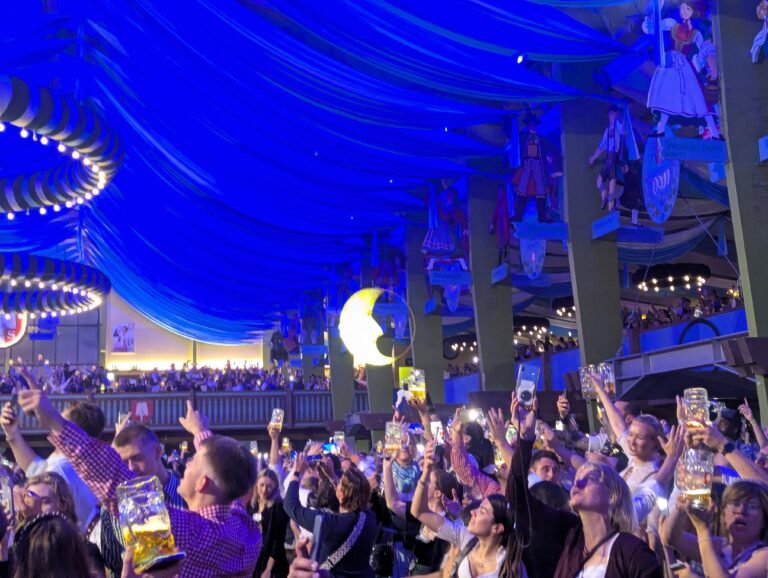
In a packed tent, you don’t introduce yourself to the whole bench. You slide in, you make room, you order, you toast. The apron bow is one of the first things people clock. In Hofbräu-Festzelt, the standing area turns into a social blender after about 18:00, and the bow does a lot of quiet work. In Käfer Wiesn-Schänke, where people dress sharper and stay later, it’s noticed even faster.
If you’re planning your day around specific tents or table times, use the live tent availability tracker before you buy a train ticket or promise your friends “we’ll just walk in”. The bow might be tradition, but reservations are modern survival.
Dirndl apron knot meaning: left, right, front, back
This is the bow-tie guide you came for. Tie it neatly, not like a gift wrap disaster. A clean bow looks better in photos and it stays put when you’re squeezing past benches.
Dirndl apron knot meaning on the left: single
Bow on the left means single. On the Wiesn it reads as “available” or at least “not taken”. If you’re with friends and you just want to enjoy the day without constant flirting, you can still tie it left and simply be direct with people. Bavarians respect a clear “passt scho” (passt scho (that’s fine)) and a smile.
Practical tip: if you’re single and you want to be left alone, choose calmer corners and food-forward tents. Fischer-Vroni is famous for fish, not chaos. You’ll still get company, but it’s usually more about “Is the Steckerlfisch worth it?” than pickup lines.
Dirndl apron knot meaning on the right: taken
Bow on the right means taken, married, partnered, complicated, not interested. Call it what you want. On a busy bench it saves you from the same conversation ten times. If you’re there as a couple, it’s also a nice little public “we belong together” without being cheesy.
If you want the signal to actually work, don’t hide it under a cardigan all day. The Wiesn can be warm inside, especially in Löwenbräu-Festzelt when the band is going and the lion outside is roaring. Tie it clean, keep it visible, done.

Bow in the middle front: “I’m a kid” (or “I didn’t get the memo”)
Traditionally, a bow centered in front is for children. On adults, it usually reads as “tourist” or “fashion choice”. Nobody will be angry, but you’ll get a few looks, especially from older Münchnerinnen who grew up with the code.
If you’re wearing a very modern dirndl and you like the front bow aesthetically, go for it, just understand the trade: you lose the social shorthand. If you’re trying to communicate clearly, stick to left or right. That’s the whole point of the dirndl apron knot meaning in a festival setting.
Bow in the back: widowed, waitress, or “hands off”
Bow in the back is the one with the most stories attached. In some traditions it can signal widowed. In others it’s connected to service staff, because it’s practical when you’re working and moving fast. On the Wiesn today, plenty of women also use it as a clear “not here for that”.
And yes, you will see servers with back bows, but do not assume anyone with a back bow is staff. Actual staff are obvious: they have a full working outfit, they carry ten beers like it’s nothing, and they’re moving with purpose. If you want to be invisible to flirting for a few hours, the back bow is a strong tool, but it’s also the least universally understood by visitors.
How locals use the code in real life (not in museum talk)
The Wiesn is not a costume party, it’s a giant social event with its own rhythm. The bow code survives because it’s useful. But it’s used lightly, not like a strict badge system. Here’s how it plays out in practice.
At a crowded table, the bow is a conversation filter
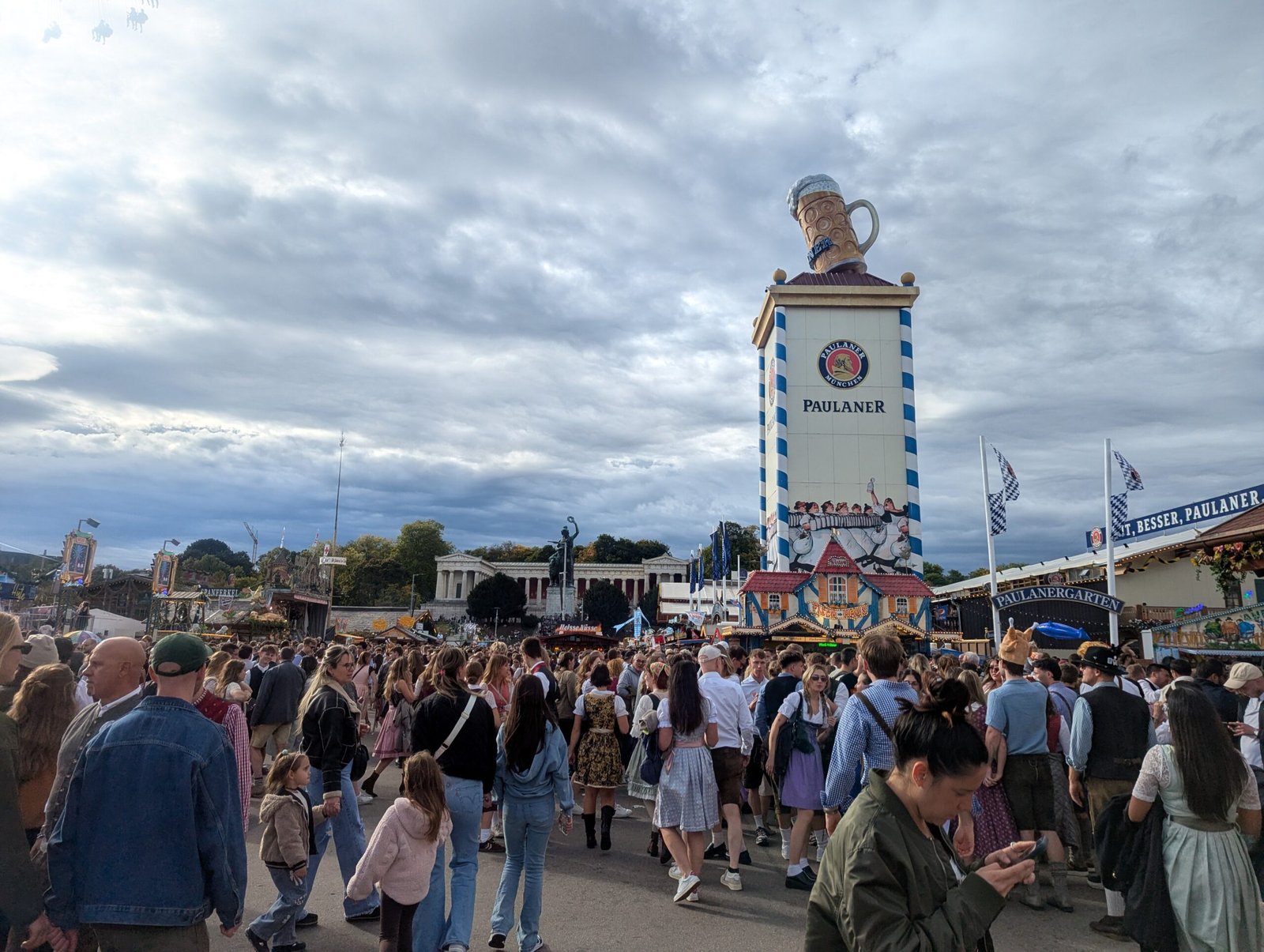
In Paulaner Festzelt (Winzerer Fähndl), you’ll often share a table with other groups, especially evenings. A left bow gets you more “Where are you from?” and more invitations to clink glasses. A right bow tends to bring more friendly small talk and fewer attempts at “so, what are you doing later?”. That’s the dirndl apron knot meaning doing its job.
In the fancy tents, details count more
In Weinzelt, people notice fabrics, shoes, how you carry yourself, and yes, where you tied your bow. Same in Käfer Wiesn-Schänke. Not because they’re snobs, but because it’s a more “Munich night out” vibe than “beer hall mayhem”. If you’re going there, wear the bow like you meant it.
On the dance floor benches, expect the code to get ignored
Some tents turn into bench-dancing zones. Hacker-Festzelt under the “Himmel der Bayern” ceiling is famous for that moment when the whole place feels like one big singing choir. When it’s that loud and happy, people are less careful with etiquette. Tie your bow correctly, but rely on your voice and your friends to set boundaries.
Practical bow-tying tips so it stays put all day
A droopy knot looks sad by noon, and it’s annoying when the apron slides around while you’re carrying plates or squeezing past. Do it once, do it right.
Tie it high enough to be visible, low enough to be comfortable
The apron waistband should sit at your natural waist, not on your hips. If it’s too low, the bow disappears under the table edge and the whole dirndl apron knot meaning signal gets lost. If it’s too high, you’ll feel squeezed after a big meal.
Double-knot first, then make the bow
This is the simplest hack: tie a firm knot, then tie your bow on top. It keeps the tails from creeping loose when you dance, sit, stand, and repeat. If your apron ribbon is slippery satin, this matters even more.
Don’t use safety pins unless your ribbon is truly hopeless
Pins can tear delicate fabric, and they look messy up close. If your ribbon won’t behave, replace it. A new apron ribbon costs less than one round of drinks. For reference, a Maß is around €14.50 in the 2025 season in many big tents, and nobody wants to spend their day fussing with a knot to save a few euros.
Culture notes: tradition, marketing, and what’s “actually Bavarian”
Not every “rule” you read online is a real, ancient rule. Dirndls changed a lot over time, and the Wiesn is a mix of local tradition and modern event culture. Still, the bow code is one of the few bits that remains widely understood, especially among people who grew up around Munich and Upper Bavaria.
If you want the official city overview for dates, opening hours, and the basics, check muenchen.de’s Oktoberfest page or oktoberfest.de. Then come back here for the details that matter when you’re actually inside a tent with a full table and a hungry stomach.
One local vocabulary note while we’re at it: if you’re ordering, “Noch a Brezn” is fine. “Maß” is spelled with ß. And “Hendl” is what you want when the roast chicken smell hits you at the entrance.
Frequently Asked Questions
Does the dirndl apron bow rule apply at Frühlingsfest too?
Yes, people understand it there as well, just with less intensity than the Wiesn. In Festhalle Bayernland (Augustiner beer, about €13.50 per Maß in 2025) it’s common to see the same left/right habits.
What if I accidentally tied the bow on the “wrong” side at Oktoberfest?
Go to the toilets, retie it, and move on, nobody keeps a record. If you’re in a loud tent like Hofbräu, the bigger issue is just getting your knot tight so it doesn’t slip again.
Is a back-tied apron bow disrespectful if I’m not widowed?
No, not on the modern Wiesn. Some locals read it as “service” or “hands off”, but it’s not an insult, it’s just a signal that can be interpreted different ways.
Do men notice the dirndl apron knot meaning, or is it mostly women?
Both notice it, but in different ways. Women tend to clock it immediately, men often notice it once someone points it out, especially at shared tables in Paulaner or Hacker.
Can I wear a dirndl without an apron at Oktoberfest?
You can, but it looks unfinished and you lose the whole bow code. If you’re spending Wiesn money anyway, buy or borrow a proper apron, even a simple one.
Quick Summary
- Left bow: single, socially “open”.
- Right bow: taken, partnered, not interested.
- Front-middle bow: traditionally for children, on adults mostly reads as fashion or confusion.
- Back bow: often read as widowed, service, or a strong “hands off” signal, interpretations vary.
- Tie it tight, double-knot first, then bow, so it survives dancing and bench-squeezing.
- The dirndl apron knot meaning is a courtesy signal, not a rulebook, but locals do notice it.
About Sepp
Servus — I’m Sepp. I’m on the Theresienwiese every September for the Wiesn and every April for the Frühlingsfest. Everything here comes from actual tent hours, not a press kit. Prost.