Oktoberfest: Afternoon vs Evening for First-Timers
The Wiesn has two personalities and most first-timers only experience one of them. Afternoon is daylight, families, manageable crowds, and visible tent facades; evening is singing, standing on benches, and an intensity that’s hard to prepare for. Which one you pick, or how you blend them, changes the whole day, so this is the practical breakdown for visitors deciding which to commit to.
Last updated April 2026. Prices reflect the 2025 Oktoberfest and Frühlingsfest seasons; expect ~3–5% annual creep.
So let’s do this properly: afternoon vs evening, with real advice, real tent names, and the little mistakes I see tourists make every year.
The Big Difference: Day Wiesn vs Night Wiesn
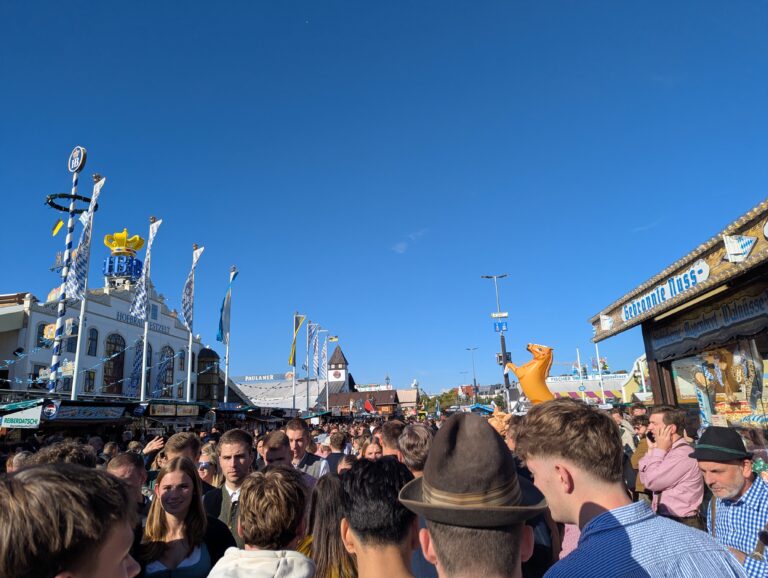
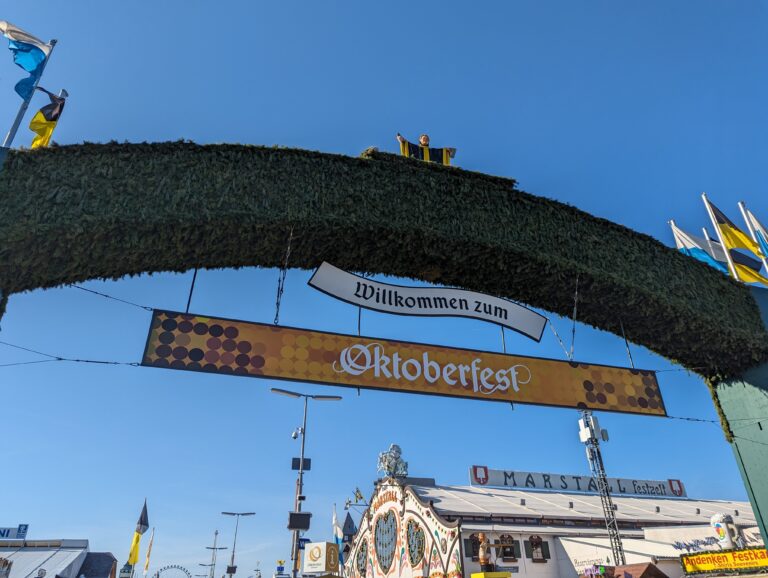
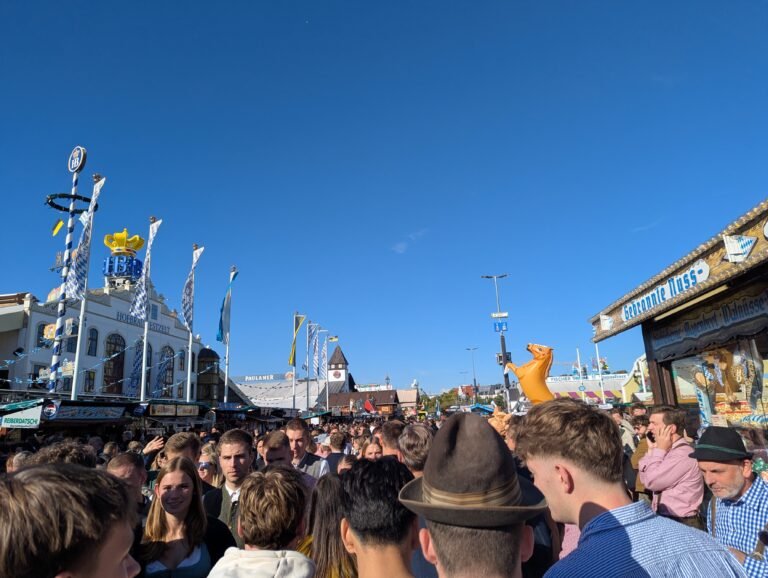
In the afternoon, the festival feels more like a giant Bavarian fair with beer halls attached: easier to move, more families, more daylight, and you can actually see the beautiful tent facades. In the evening, it becomes louder, denser, more intense—more singing, more standing on benches, more “I can’t believe this is real.”
Neither is “better” in general. But for first-timers, your choice should depend on what you want: a smoother introduction or the full blast.
Afternoon at Oktoberfest (Roughly 11:00–16:30)
The Vibe
Afternoon is my favorite for first-timers who want to enjoy the tradition, eat properly, and not fight for every square meter of space. The music is still lively, but it’s often more “Gemütlichkeit” (coziness) than full-on chaos. You’ll see groups in Tracht (traditional clothing) and plenty of people who are there for food, conversation, and a relaxed Maß (one liter of beer).
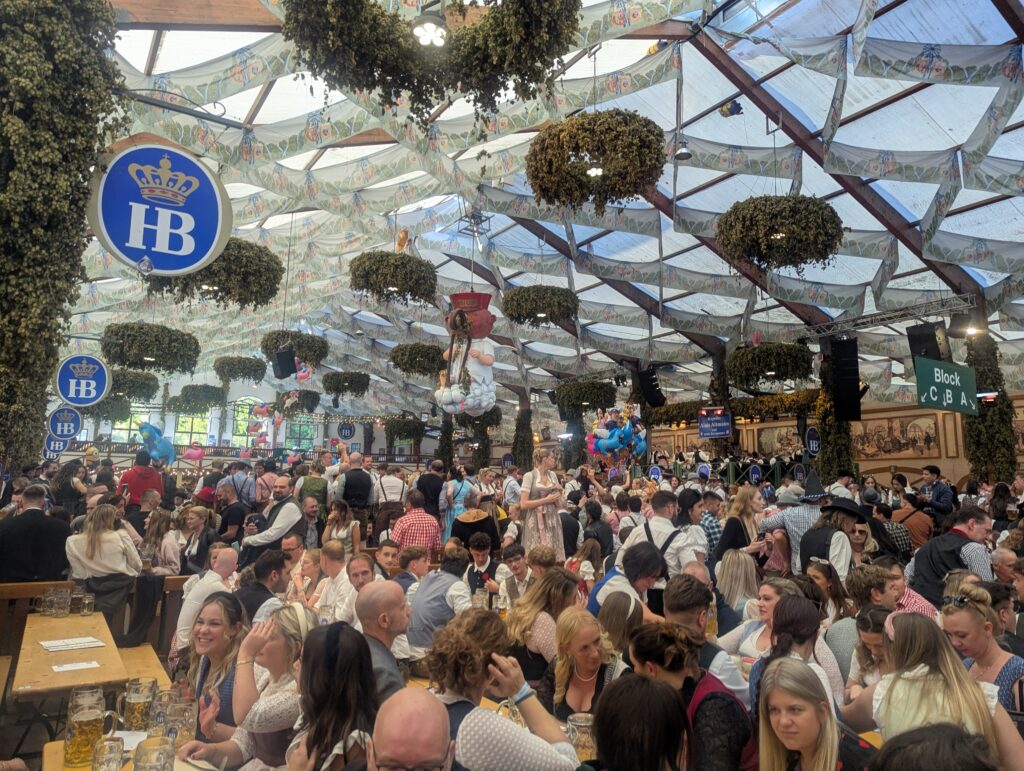
If you’ve never been, afternoon gives you time to learn the rhythm: how ordering works, when to tip, where the toilets are, how to find your friends when the cell network gets grumpy.
Practical Pros
- Easier entry and seating: On weekdays, you can often get a seat if you arrive around opening (usually 10:00 on weekdays; many tents open 09:00–10:00 depending on day—check the official schedule). Weekends are harder, but still more doable earlier.
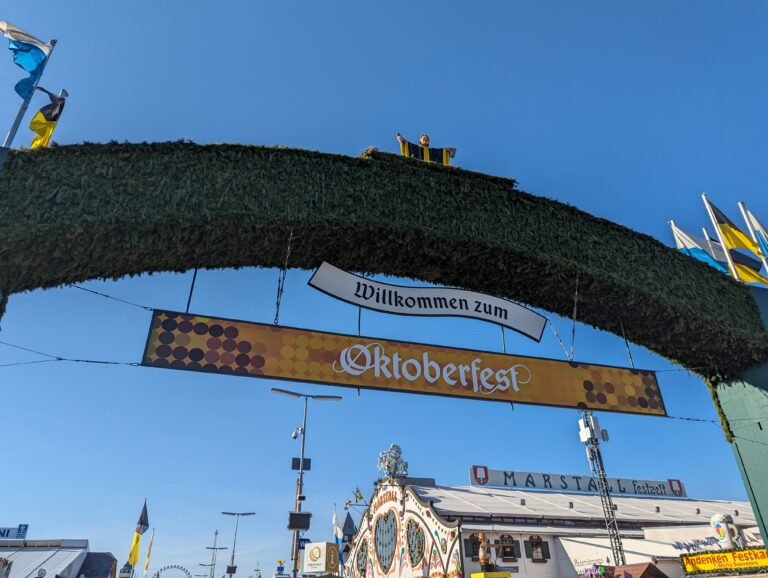
- Better for photos: Daylight makes the whole Theresienwiese look postcard-perfect.
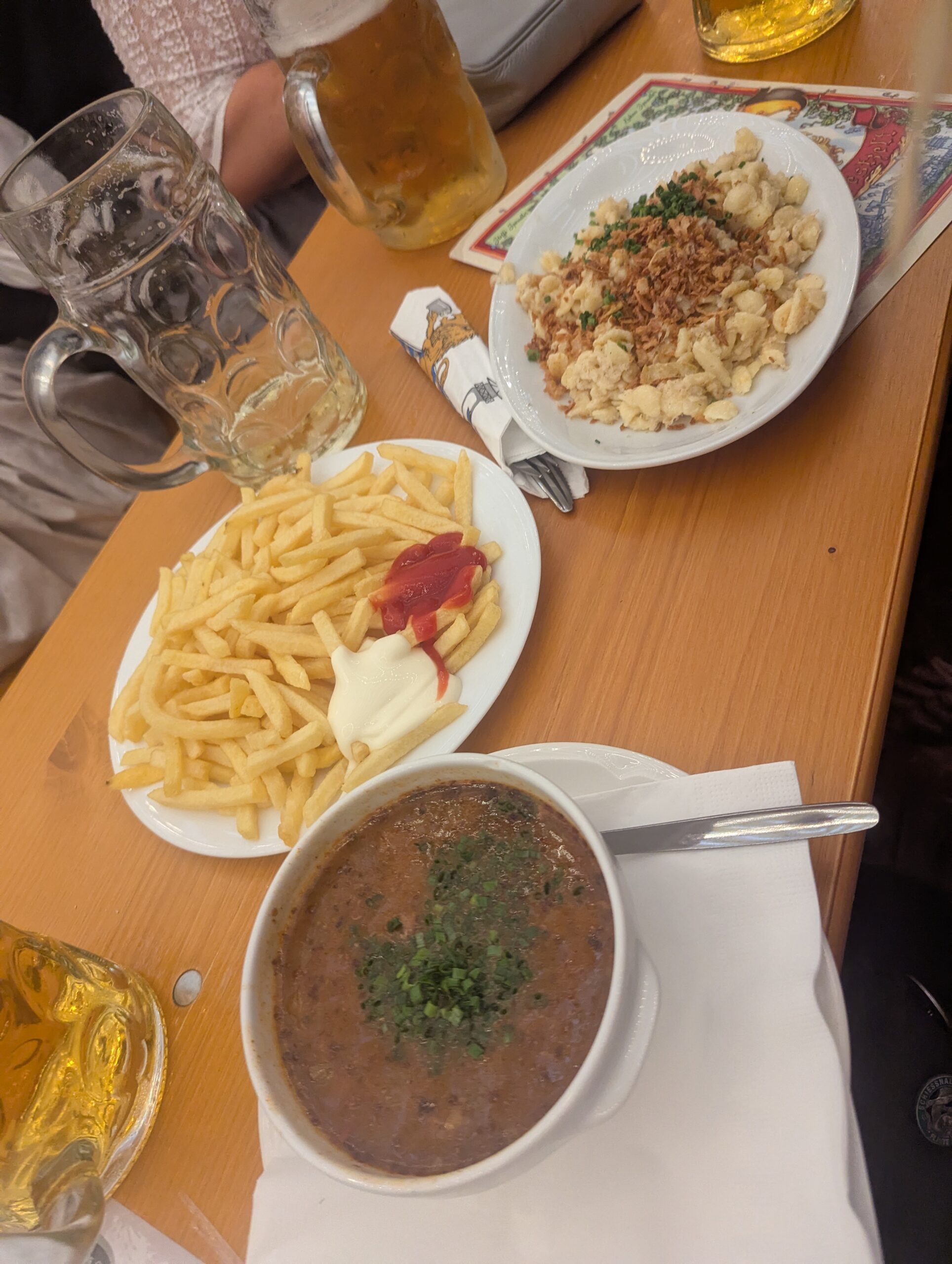
- Better food experience: Kitchens are fast, you’re not rushed, and you’ll actually remember what you ate.
- Good for pacing: Starting early doesn’t mean drinking more—it often means drinking smarter.
Practical Cons
- It can feel “too calm” if you expected instant bench-dancing madness.
- Some parties don’t fully ignite until later, especially in certain tents.
- Leaving and re-entering is tricky: If you’ve got a seat, don’t wander off too far—especially after 15:00.
My Go-To Afternoon Tents (First-Timer Friendly)
Augustiner-Festhalle (near the main entrance side): This is my heart-tent. Augustiner is still served from wooden barrels (Holzfass), and the crowd feels a bit more local and less “bucket list gone wild.” If you want classic Wiesn without the rough edges, start here.
Ochsenbraterei (toward the middle): Great if you’re hungry. They roast whole oxen—proper Bavarian spectacle—and it’s a fun, friendly hall in the daytime.
Schottenhamel (near the main entrance): Famous for the opening tap (“O’zapft is!”). In the afternoon it’s a good warm-up before things get louder at night.
Food and Beer: What You’ll Pay
Prices change every year, but for planning: a Maß of beer is typically around €14–€16 in recent years. Soft drinks and water aren’t “cheap” either—expect roughly €10–€12 for a large non-alcoholic drink in many tents.
Food depends on hunger level:
- Hendl (roast chicken): often around €14–€18
- Schweinshaxe (pork knuckle): roughly €20–€27
- Brezn (pretzel): around €5–€7
Tip from Sepp: Don’t just “share a pretzel.” Order a real meal early afternoon. Every year I see tourists drink on an empty stomach, and by 17:00 they look like a sad Weißwurst (white sausage) left in the sun. Eat first, party second.
Afternoon Strategy (My Practical Plan)
- Arrive early: If you want the big tents, be there around opening time. On weekdays, showing up at 10:00–10:30 is a power move.
- Sit inside first, then explore: Lock in a table, order food, then do a quick walk later.
- Learn the “table culture”: If you’re two people at a big table, you will share with strangers. That’s normal—and it’s often the best part. A friendly “Ist hier noch frei?” (Is this seat free?) goes a long way.
If you want more on when to show up and how to avoid long lines, I’ve got a deeper planning post here: best arrival times at the Wiesn.
Evening at Oktoberfest (Roughly 17:00–23:00)
The Vibe
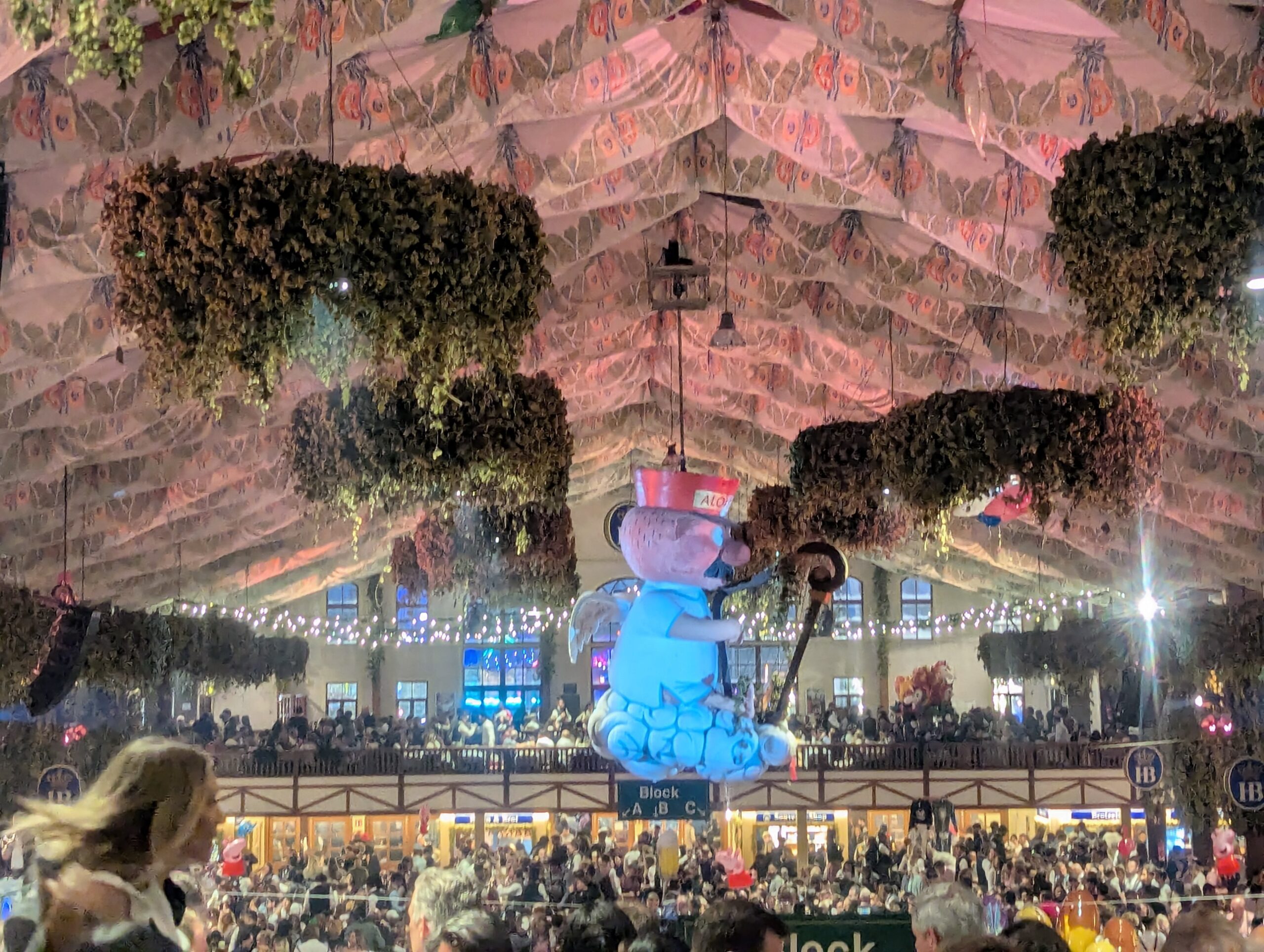
Evening is the Wiesn on turbo. By 18:00–19:00, many tents are packed, the band leans into the crowd-pleasers, and the bench-standing starts (standing on benches is common; standing on tables is a fast way to meet security—don’t). This is when the festival becomes the “legend” you’ve seen in videos: singing, clinking glasses, and meeting new friends from five countries in ten minutes.
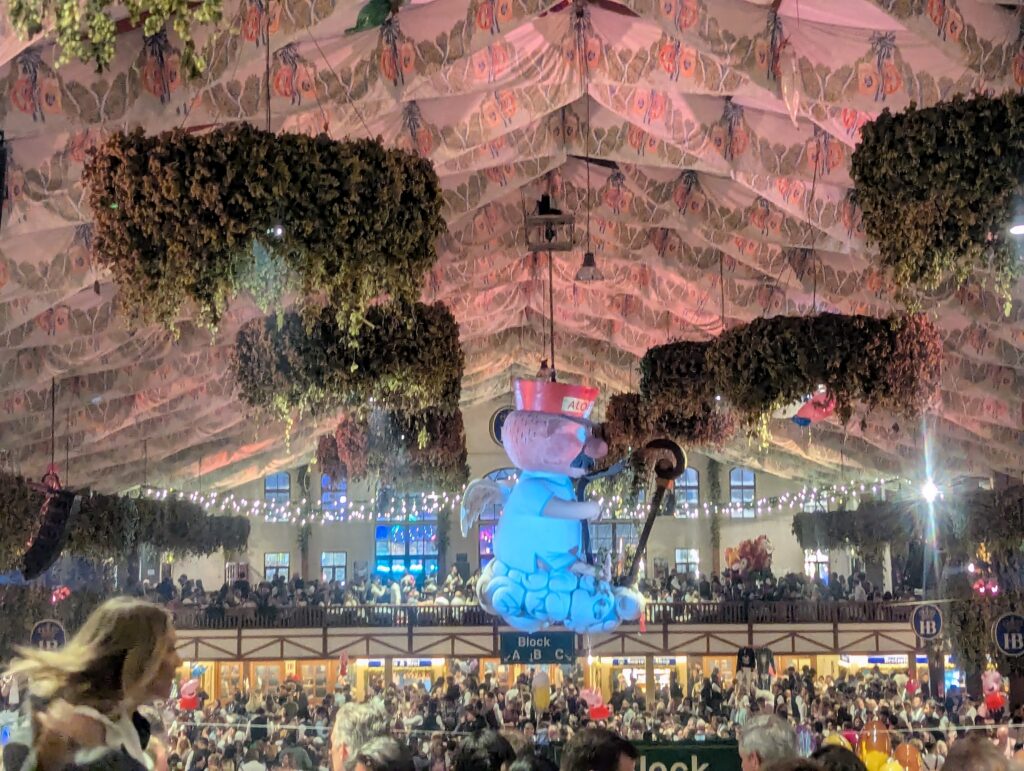
If you’re a first-timer who wants the full spectacle and you can handle crowds, evening can be unforgettable. But you need a plan.
Practical Pros
- Maximum atmosphere: If you want goosebumps and loud singing, this is your time.
- Best for groups: A lively crew fits the evening energy nicely.
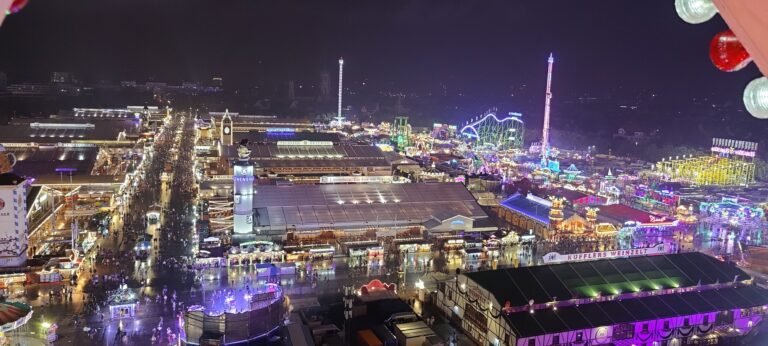
- Night lights and fairground vibes: The Theresienwiese at night is beautiful—rides, lights, and that festival buzz.
Practical Cons (The Stuff That Surprises First-Timers)
- Getting a seat is hard: Without a reservation or very good timing, you may not sit inside a big tent on Friday/Saturday night. Even weekdays can be tough after work hours.
- Security and entry stops: When tents reach capacity, they temporarily stop entry. This is normal. Don’t argue with security; just pivot to Plan B.
- It’s easier to overdo it: The energy makes people drink faster than they realize.
The most common tourist mistake here is: they arrive at 19:30 on a Saturday expecting to stroll into Hofbräu like it’s a normal pub. Then they spend two hours wandering outside in disappointment. You don’t want that.
My Favorite Evening Tents (Where the Party Is Reliable)
Hofbräu-Festzelt (more toward the middle): The most international vibe. It can be wild, it can be chaotic, and it can be extremely fun if you go in with open eyes. There’s also standing-room culture in parts of the tent (less “sit politely,” more “sing loudly”). Great for meeting people.
Paulaner Festzelt (Winzerer Fähndl) (you’ll spot the tall tower): Consistently strong band energy. If you want that classic “everyone singing together” feeling, this is a safe bet.
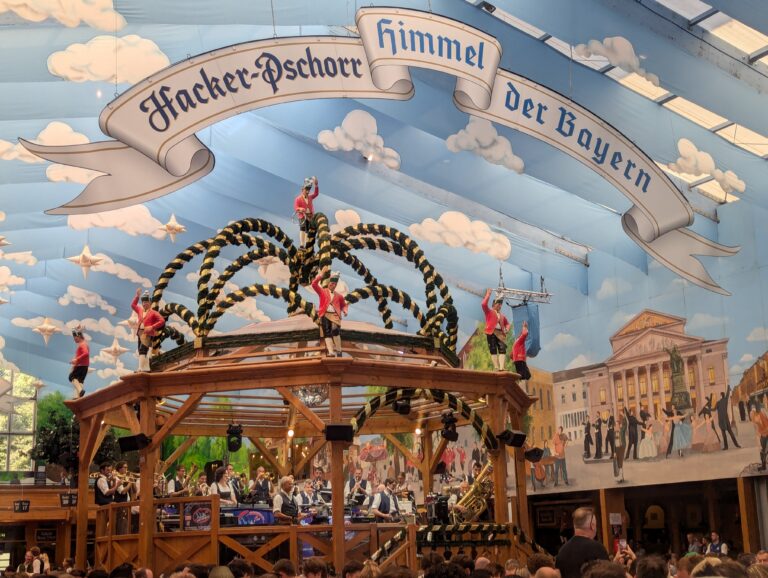
Hacker-Festzelt (“Himmel der Bayern” ceiling): One of the prettiest interiors, and the evening atmosphere is fantastic. It’s popular for a reason—so plan accordingly.
If you’re deciding which tent matches your style (traditional vs party vs family-friendly), bookmark this: my tent guide for first-timers.
Evening Strategy (How to Actually Enjoy It)
- Go earlier than you think: If “evening” is your goal, aim to enter a tent by 16:00–17:00, especially Thursday–Saturday. Yes, that’s earlier than dinner time in many countries. That’s Oktoberfest.
- Have a Plan B tent: Pick two nearby tents so you’re not crossing the entire grounds if one is full.
- Keep cash handy: Card acceptance varies; inside tents it’s still smart to assume cash is king. ATMs exist but can have queues and fees.
- Know the bag rules: Big backpacks can be refused at entry. Bring a small bag and travel light.
One more practical detail: it’s common that the atmosphere peaks before closing time. Don’t wait until 22:00 to “start.” By then you’ll just be stressed, seatless, and sprinting for the last U-Bahn like a confused tourist deer.
What I Recommend for First-Timers (My Opinionated Take)
If it’s your first Wiesn ever, I usually recommend starting in the afternoon—especially if you’re coming from another time zone or you’re not sure how your body handles a liter-sized beer. Afternoon lets you learn the rules, enjoy the tradition, and still catch plenty of fun.
But if your dream is the loud, classic Oktoberfest party, then do a hybrid day: start afternoon, take a break, then return early evening with a plan.
The Best “Hybrid Day” Schedule (Works Like a Charm)
- 10:30–11:00: Arrive, walk the grounds, enjoy the façades, get your bearings.
- 11:00–14:00: Lunch inside a tent (I’d pick Augustiner or Ochsenbraterei). One Maß, lots of water, proper food.
- 14:00–16:00: Ride something, stroll, maybe a coffee break outside the Wiesn.
- 16:00–17:00: Re-enter and aim for your evening tent before the crush.
- 17:00–21:30: Enjoy the peak atmosphere without pushing yourself into the late-night scramble.
Small Cultural Tips That Make a Big Difference
Ordering and Tipping
Be direct and friendly. When the server comes, order clearly: “Zwei Maß, bitte” (two liters, please). Tip rounding is normal; don’t do the awkward coin-counting dance. If your bill is €29, say “Mach ma dreißig” (make it 30). Good service at the Wiesn is fast, strong, and not magical—tipping helps you get seen again.
Bench Etiquette
Standing on benches is common when the mood is high. Don’t stand on tables. Also: if people are singing, clinking, and having fun, join in—but don’t shove. Oktoberfest is crowded enough without elbows.
Don’t Wear Yourself Out on Day One
First-timers often try to “win” Oktoberfest in one night. Better: plan two visits—one afternoon-focused, one evening-focused. The festival is a marathon, not a sprint. If you want tips on pacing, transport, and what to bring, I wrote a practical checklist here: Oktoberfest first-timer checklist.
Related reading: Oktoberfest Tips: Get a Seat Without Reservation · Discover the Best Times to Visit Oktoberfest
Frequently Asked Questions
About Sepp
Servus — I’m Sepp. I’m on the Theresienwiese every September for the Wiesn and every April for the Frühlingsfest. Everything here comes from actual tent hours, not a press kit. Prost.
Is it better to go to Oktoberfest in the afternoon or evening?
It depends on what you want. Afternoons are easier for getting seats, better for food, and calmer — ideal for first-timers. Evenings have the full party atmosphere with the band in full swing and a bigger crowd. Both are Oktoberfest, just different versions of it.
How early should you arrive at Oktoberfest to get a seat in the afternoon?
Aim for 10–11am on weekdays, or 9–10am on weekends. By early afternoon (1–2pm) on busy days, popular tents are often at capacity. The earlier you arrive, the more choice you have.
What time does the atmosphere peak at Oktoberfest?
The energy builds from around 4–5pm as the after-work crowd arrives. Peak atmosphere is typically 6–9pm when the bands are playing full songs and the whole tent is singing. It’s louder and more crowded, but genuinely electric.
Can you do both afternoon and evening at Oktoberfest in one day?
Absolutely — this is actually my favourite approach. Start with lunch around noon, enjoy the calmer afternoon vibe, take a break in the early evening (walk the grounds, get food outside), then head back into a tent around 6–7pm for the evening session.
What’s the main crowd difference between afternoon and evening Oktoberfest?
Afternoons have more families, first-timers at a leisurely pace, and fewer very drunk people. Evenings draw a younger crowd, more locals finishing work, and the intensity is higher. Both are fun — it’s really about your group’s energy and what kind of experience you’re after.
Sepp’s Quick Summary
- Afternoon is best for first-timers who want tradition, easier seating, better food, and a calmer learning curve.
- Evening has the biggest party atmosphere—but seating is difficult unless you arrive by 16:00–17:00 and keep a Plan B.
- My first-timer tent picks: Augustiner for classic gemütlich, Paulaner/Hacker for reliable evening energy, Hofbräu for international party chaos (in a good way).
- Budget realistically: a Maß is ~€14–€16, meals commonly €14–€27; bring cash and eat early.
- The best approach is a hybrid day: afternoon tradition + early evening peak, then leave before the late-night stress.
One Comment